The Truth About “Waterproof” Flooring: What Ontario Homeowners Need to Know
November 18, 2026
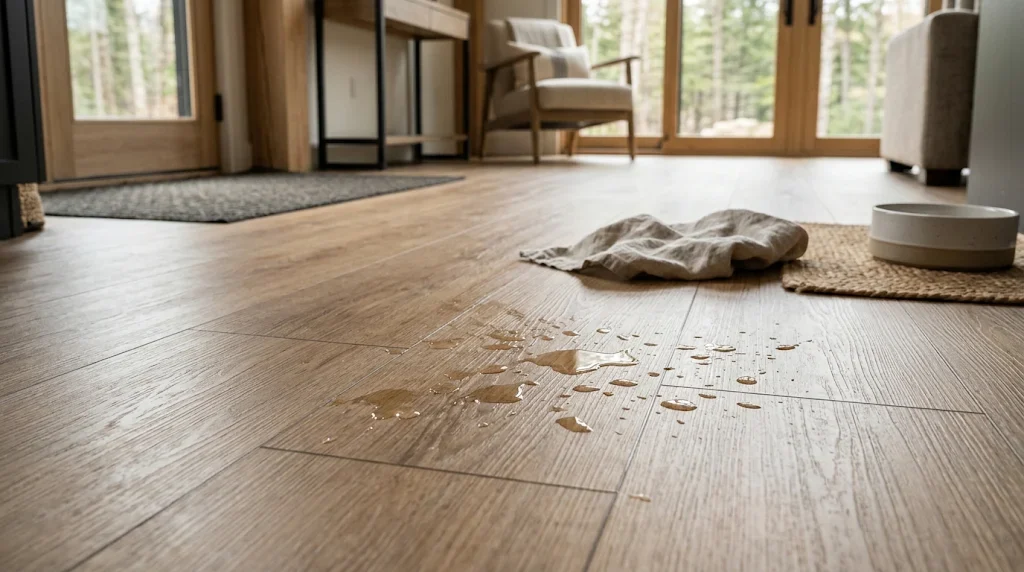
If you’ve shopped for flooring in the last few years, you’ve seen it plastered across showroom floors, retail websites, and manufacturer ads: waterproof. Luxury vinyl, SPC, WPC, laminate — even certain wood products now carry the label. It sounds like a homeowner’s dream, especially in Ontario, where the humidity levels climb high in the summer and homeowners welcome guests and their 4-legged companions straight from the lake, pool, or nearest mud puddle.
But here’s what the flooring industry doesn’t always make clear: “waterproof” means something much more specific than most buyers realize. Understanding the difference between what a waterproof label promises and what it actually covers could save you from a very expensive misunderstanding.
The Word “Waterproof” Has Been Oversold
The problem started with good intentions. Water-resistant flooring genuinely was a leap forward — surfaces that could handle spills, splashes, and pet accidents without warping or staining were a real improvement over older options. But somewhere along the way, the marketing got ahead of the reality. The term “waterproof” began to imply something stronger: that the floor was impervious, bulletproof, immune to water damage of any kind.
It isn’t.
Products labeled as waterproof — including luxury vinyl tile (LVT), luxury vinyl plank (LVP), stone plastic composite (SPC), wood plastic composite (WPC), and many laminates — do offer meaningful water resistance. The core materials in these products won’t absorb moisture the same way older laminates would. That’s real. But “waterproof” as a warranty term refers specifically to topical water exposure: spills, drips, the occasional mop-water overflow. If you have a spill and clean it up, the floor is fine.
What waterproof does not cover — and this matters enormously for Ontario homeowners — is flooding and leaks.
What Happens When the Water Keeps Coming
When a significant amount of water infiltrates your floor, it doesn’t just sit on top. It works its way into the joints between planks. And when it reaches the subfloor below, that subfloor absorbs it.
Once the subfloor swells, the floor above it has nowhere to go. Planks buckle. Joints pop. The floor fails — and there is no manufacturer warranty that will cover it, regardless of how many times the word “waterproof” appeared on the box.
This isn’t a technicality hidden in fine print. It’s a fundamental misunderstanding of what the product was designed to do. Waterproof flooring was engineered to handle the realities of daily life, covering surface spills only. It was not engineered to survive a flood or water that gets through and under the flooring.
Reading a Waterproof Warranty the Right Way
Most hard surface flooring products sold today carry what’s called a “limited lifetime warranty.” That warranty covers manufacturing defects — things like delamination, finish bubbling, or structural failure under normal use. The “waterproof” portion covers topical water: if a spill soaks through a joint momentarily, the floor should still perform. That’s a legitimate and useful protection.
What falls outside that warranty every time:
- Flooding or standing water of any duration
- Subfloor failure caused by water infiltration
- Moisture migration from below where slab-on-grade construction and environmental factors create upward moisture pressure
- Improper installation that compromises the floor’s ability to handle water contact at all
How to Shop Smarter for Water-Resistant Flooring in Ontario
The goal isn’t to avoid Vinyls or Laminates — these are genuinely excellent products for the right applications. The goal is to buy them with accurate expectations for how they perform, and proper installation.
Match the product to the risk level. For most main living areas, an SPC or WPC luxury vinyl gives you solid daily water resistance without overpaying for capability you don’t need. For areas with higher moisture exposure — laundry rooms, bathrooms, spaces near exterior doors — installation method and substrate preparation matter as much as the product itself.
Understand what the floor sits on. In Ontario, subfloor condition is everything. A waterproof floor installed over a compromised or moisture-saturated subfloor is only as good as what’s underneath it. A professional installer will assess moisture levels before laying a single plank.
Ask about the warranty before you buy. Any reputable flooring specialist should be able to walk you through exactly what the manufacturer covers — and more importantly what they don’t.
At Floortrends, our team helps Ontario homeowners navigate these decisions every day. We carry luxury vinyl options from trusted brands including Beaulieu, BiYork, COREtec, Karndean, Mannington, and Martin & Co. — and we’ll explain what you’re actually buying before you commit.
“On time, excellent installation, did a couple of things above and beyond. I highly recommend these folks if you are looking for flooring.”
— Bill W., Belleville area
Why It Matters Where You Buy
When something goes wrong with a floor, you want a retailer who will stand behind what they sold you. As a member of the National Floorcovering Alliance, Floortrends is part of an elite group of independent dealers that holds itself to a higher standard — not just on product quality, but on accountability after the sale. That means our team works through problems with you.
For homeowners, that kind of post-sale support isn’t a luxury. It’s part of what you’re paying for.
Frequently Asked Questions
Is luxury vinyl flooring really waterproof?
Luxury vinyl is water-resistant to topical water exposure — meaning spills and everyday moisture. The waterproof warranty covers surface contact only. It does not protect against leaks, flooding, standing water, or moisture migrating up from below the floor.
What voids a waterproof flooring warranty?
Most waterproof flooring warranties are voided by flooding or standing water, improper installation, subfloor failure, and moisture migrating upward from below the slab. Always read the specific manufacturer warranty before purchasing.
Can I install waterproof flooring in a flood-prone area in Ontario?
You can, but with realistic expectations. No flooring product currently available is designed to withstand flooding. In flood-prone areas and homes with known flooding issues, we recommend addressing the flooding issue before proceeding with replacing your flooring. If that’s not an option, focus on products that are easy or inexpensive to replace.
Why does subfloor preparation matter so much in Ontario?
Ontario homes sit on ground that can vary substantially — from dry sand to heavy clay with high moisture content, slabs facing the later situation deal with moisture pressure from below. A compromised or improperly prepared subfloor will transfer that moisture upward — even if the floor above it is marketed as “waterproof.” Some products may require a vapour barrier when installed on concrete to mitigate against moisture.
What’s the difference between SPC and WPC and Loose Lay luxury vinyl?
Both SPC and WPC are rigid-core luxury vinyl formats that are a floating installation. SPC (Stone Plastic Composite) uses a denser, harder core that resists denting. WPC (Wood Plastic Composite) has a slightly softer core and often feels more comfortable underfoot. Loose Lay products are typically glued down installation and offer comfort and greater flexibility. For Ontario’s climate, all are strong performers — the right choice depends on your traffic level, room size, subfloor conditions, and aesthetic preference.
Ready to find the right water-resistant flooring for your home? Stop by any of our 5 Ontario showrooms or book a complimentary estimate online. The Floortrends team will walk you through your options honestly — no overselling, no fine-print surprises.
You Might Also Like
-
- Flooring
- flooring colors
- flooring trends
April 3, 2025
Our Favourite Floors: Made In Canada
-
- Flooring
- flooring colors
- flooring trends
March 17, 2025
Our Favourite Floors: Green With Envy
-
- Flooring
- flooring colors
- flooring trends
November 12, 2024
Add Colour to Your Home with Fabulous Floors